Aviation, much like yachting, represents freedom, reach, and precision. It also carries responsibility. Every flight involves complex decisions around safety, performance, and fuel use – often made under pressure and in environments where there is little margin for error.
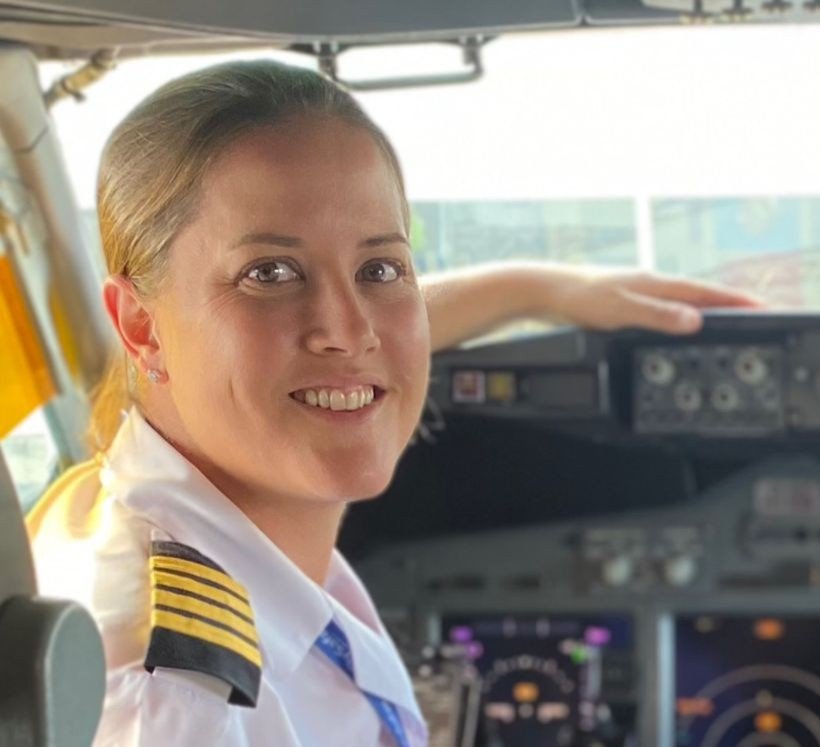
As Growing Decks expands its work to include jet fuel emissions, we spoke with Kate Nel, a pilot captain, about leadership in aviation, responsibility in fuel-intensive industries, and what it means to operate at the controls as a woman in a traditionally male-dominated field.
As a Captain in aviation, what does leadership mean to you in such a high-responsibility role?
Good leadership on the flight deck begins with setting the tone before we start each day: how you treat your crew, ensuring that everyone feels comfortable to speak up and challenge decisions if they feel it’s the right thing to do, no matter if they’re a seasoned crew member, or if they’re brand new to the job. As the captain, the accountability ultimately falls on me, but the best decisions are most often those made as a team, rather than in isolation.
Given the high stakes involved in our jobs, using all of your resources, staying calm under pressure, and effective communication are vital tools that we use to increase our resilience in the work place.
Having spent 16 years as a first officer, I found that the best captains were the ones who gained the full trust, respect and support of their crew and that is the kind of captain I strive to be every time I put on the uniform.
Aviation relies heavily on fuel. How do you personally think about responsibility and emissions within your profession today?
Aviation is obviously a massive contributor to global carbon emissions, and while we don’t yet have the technology to eliminate emissions entirely, we do have a duty to reduce them wherever possible.
For those of us on the front line, this means flying efficiently, following fuel-saving strategies, and supporting operational decisions that reduce unnecessary burn — even when they require more planning or discipline.
Industry Strategy and “Fly Net Zero”
At an industry wide level, our regulating bodies are heavily involved in the fight for a greener future. The International Air Transport Association (IATA) has formulated a plan called “Fly Net Zero”. The goal is to achieve net-zero carbon emissions by 2050 through various methods including more sustainable fuels, new technologies, and carbon capture (a way of cleaning the air) and offsets (through strategies such as forestation).
What advice would you give to young women considering careers in aviation or other industries traditionally dominated by men?
I am very fortunate that I have never felt singled out or looked down on in my entire career. I have always worked with highly professional and mature groups of people, even starting out very young in this industry, I was always made to feel welcome and deserving. You don’t have to fit a stereotype to belong in the cockpit or anywhere else for that matter. Hard work, dedication and professionalism will speak volumes about you, and ensure that no one is ever in doubt of your right to be where you are.
There will be moments when you’re the only woman in the room, but your presence there matters. The world needs diversity of thought, experience, and leadership style, and women absolutely have a place in shaping the future of aviation, as well as other industries where they have always been in the minority.